
Latest Blog
How to Reduce Germs and Bacteria in Your Home
The best way to reduce germs and bacteria at home is to focus on a few high-impact habits. Clean the surfaces you touch most, let in fresh air, keep damp under control, wash your hands well, and add tools that work quietly in the background.
You do not need to make your home perfectly sterile. The goal is to keep the germ level low in the places that matter, so bugs are less likely to spread.
This guide walks through where germs build up, the habits that help most, and a few simple tools that do some of the work for you. Every tip here is easy to start today, with no special training or expensive kit.
Want a cleaner, healthier home with less effort? Ask Ermen Systems about simple tools that reduce germs all day.
Where do germs build up at home?
Germs gather in two kinds of place: things many hands touch, and spots that stay warm and damp.
High-touch items include door handles, light switches, taps, phones and remote controls. In the kitchen, chopping boards and sponges hold a lot of bacteria. In the bathroom, the toilet area and damp corners are the main worry. These few spots cause most of the spread in a normal home.
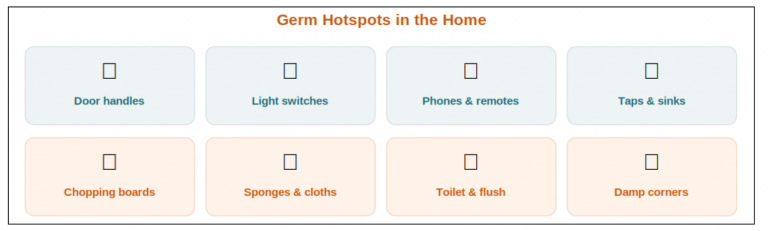
Germs spread from these spots to your hands, and from your hands to your face and food. That is the chain you want to break, and it is easier than trying to clean everything at once.
Knowing these hotspots helps you spend your effort where it counts, instead of scrubbing places that were never the problem.
How do you reduce germs on surfaces?
There are two steps that people often mix up: cleaning and disinfecting. Cleaning removes dirt and lifts most germs off a surface. Disinfecting then kills what is left behind. For most homes, doing both in the right places is plenty.
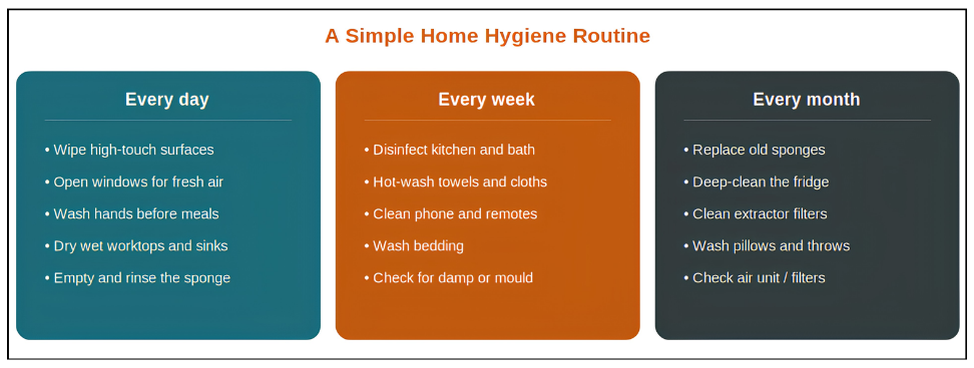
For daily life, a quick wipe of high-touch surfaces is enough to keep them in check. Give the kitchen and bathroom a proper disinfect once a week, or more often if someone is unwell. Let surfaces air-dry, as germs struggle to survive on a dry surface.
Sponges and cloths are a hidden trap. Rinse them out, let them dry, and replace them often. A damp sponge left in the sink can hold more germs than almost anything else in the house.
You do not need lots of products either. A basic cleaner for daily wiping and one disinfectant for the weekly job will handle most of the work in an average home.
Why does fresh air matter?
Airing your home is one of the simplest ways to cut germs, and it costs nothing. Fresh air dilutes stale indoor air and carries airborne germs, moisture and smells outside. A stuffy, closed-up room lets germs hang around far longer.
Open windows for a few minutes each day, even in winter. A short, wide airing works better than leaving one window cracked all day. Use the extractor fan when you cook or shower, so steam and smells do not linger.
If opening windows is not practical, a proper system helps. There are good home ventilation options that bring in fresh air without losing much heat.
Struggling with stuffy or damp rooms? Talk to our team about fresh-air and air-cleaning options for your home.
How do you control damp and mould?
Damp is a big cause of home health problems. Mould is a fungus that grows in wet spots and releases spores that you breathe in.
Try to keep indoor humidity below about 60%. Wipe down wet surfaces, fix leaks quickly, and do not dry lots of washing indoors without airflow.
Damp and mould can trigger coughs, allergies and asthma, so this is worth taking seriously. A small dehumidifier or better airflow often solves the problem for good.
If damp keeps coming back, this guide on how to reduce humidity at home covers both natural steps and simple technology that helps.
Simple daily habits that help
Small habits, repeated often, do more than the odd big clean. These are the ones worth building into your normal day.
-
Wash hands with soap for 20 seconds, especially before food.
-
Hot-wash towels, tea towels and bedding regularly.
-
Do not share hand towels when someone is ill.
-
Clean your phone, it goes everywhere with you.
-
Take shoes off at the door to keep outdoor dirt out.
None of these is hard. Together they keep the everyday germ level low without much thought. Pick two or three to start with, then add more once they become habit.
Kitchens, kids and pets: a few extra tips
Some parts of the home need a little extra care, especially where food or young children are involved.
In the kitchen, keep raw meat away from other food, and use separate boards if you can. Wash your hands after handling raw food, before you touch anything else.
With young children, clean toys and play surfaces regularly, since little hands touch everything and then go to the mouth. With pets, wash their bowls often and keep their bedding clean, as these can hold bacteria too. A quick wipe of feeding areas after meals makes a real difference.
Which tools reduce germs automatically?
Some tools keep working in the background, so your home stays cleaner between the jobs you do by hand. They are handy for busy families who cannot clean all day.
An air unit made for the home can cut airborne germs, dust and smells; the PureAir home air unit is one example. There is also antibacterial lighting that lowers germs on surfaces and in the air using safe visible light, all day.
The nice thing about these tools is that they never forget. They keep working while you are at work, asleep or busy with the children, adding a steady layer of protection.
They are helpers, not replacements. They work best on top of good cleaning and fresh air, and you can see why this kind of lighting suits family homes.
What to do when someone is ill at home
When a cold or bug is going around the house, a few extra steps stop it spreading to everyone else under the same roof.
Clean high-touch surfaces more often, and give the sick person their own towel and, if possible, their own bathroom. Wash their bedding and towels on a hot cycle.
Keep rooms well aired, and empty bins more often. Once everyone is well again, do one fuller clean of the shared spaces to reset things.
Ready to make your home cleaner and healthier? Contact Ermen Systems for friendly advice and options.
What you do not need to do
It is easy to go too far, so it helps to know where to stop.
You do not need to disinfect every surface all day, and you do not need harsh chemicals in every room. Over-cleaning can irritate skin and lungs, and strong fumes are not good to breathe. Some bacteria around the home are harmless, and a normal immune system copes with them fine.
There is also no need to buy every gadget at once. Start with the free habits, then add one tool if you want extra help. A calm, steady routine beats a frantic deep clean once a month. Aim for low and consistent, not spotless and stressful.
Frequently Asked Questions
Clean high-touch surfaces, open windows daily for fresh air, keep damp under control and wash your hands often. These simple steps cut most everyday germs.
Kitchen sponges and cloths, chopping boards, and high-touch items like handles, switches and phones tend to hold the most bacteria.
A quick daily wipe is ideal, with a fuller disinfect of the kitchen and bathroom about once a week, or more often if someone is unwell.
Yes. Fresh air dilutes stale indoor air and moves airborne germs out, which is why a few minutes of airing each day helps.
They can. They lower germs in the background, all day, but they work best alongside normal cleaning and fresh air, not instead of it.
Conclusion
Reducing germs and bacteria at home does not require constant cleaning or harsh chemicals. Focus on the areas that get touched most, keep your home well ventilated, control damp and mould, and maintain simple daily hygiene habits. For extra support, Ermen Systems offers solutions such as home air-cleaning and specialised antibacterial lighting that can add another layer of protection. The goal is not a perfectly sterile home, but a cleaner, healthier environment that is easier to maintain every day.
