Latest Blog
Do Air Sterilisers Work? What to Know Before You Buy
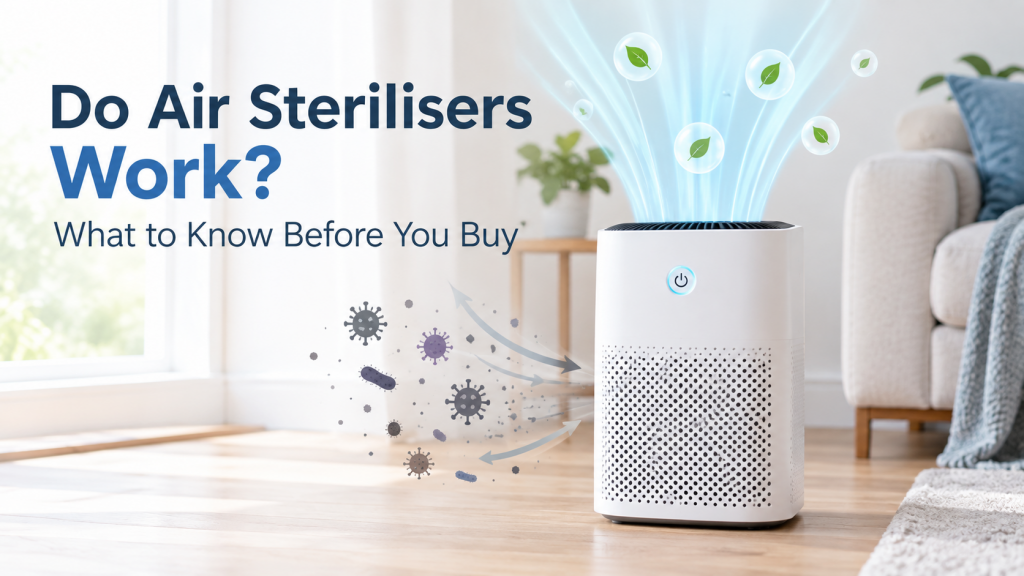
Yes, a good air steriliser can work. The right unit can cut airborne germs, dust, pollen and smells in a room. But results depend a lot on the type of unit, the size of the room and how you use it.
Cheap or badly sized units often do very little. Some older designs can even add unwanted gases to the air. So the real question is not just whether air sterilisers work, but which one is right for your space, and whether it is safe to run around people.
This guide explains how air sterilisers work, the main types, and the key things to check before you spend any money. By the end you should know what to look for and what to avoid, so you do not waste money on the wrong unit.
Not sure which air steriliser suits your room? Ask Ermen Systems for clear, no-pressure advice.
What is an air steriliser?
An air steriliser is a device that cleans the air in a room by reducing germs and particles. Some pull air through a filter. Others treat the air with light, ions or other methods, and many combine two or three of these in one box.
People often mix up two words here. An air purifier mainly removes particles like dust and pollen. An air steriliser goes a step further and aims to kill or inactivate germs. Many units do both, which is why the labels get blurred in shops and online.
If the labels confuse you, this short guide on air sanitisation versus air purification clears up the difference in plain terms.
Do air sterilisers actually work?
They can, and there is solid testing behind the better ones. A well-chosen unit that is the right size for the room will lower the number of germs and particles floating in the air. Hospitals, labs and food sites have relied on this idea for years.
The catch is that performance varies hugely between products. A strong unit in a small room does a great job. The same unit in a large hall barely makes a dent, because the air is too much for it to handle.
Two things decide the result: how much clean air the unit makes each hour, and whether that matches your room. Independent test figures matter far more than bold marketing claims.
It also helps to be realistic about what ‘works’ means. An air steriliser lowers the germ and dust level in the air; it does not make a room perfectly sterile. Used well, it gives you cleaner, fresher air most of the time.
What types of air steriliser are there?
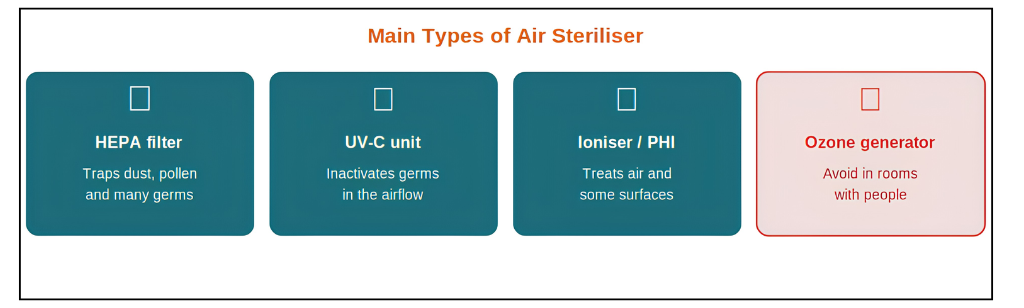
There are a few main methods, and each has strengths and weak points. Knowing the basics helps you read the labels and spot marketing dressed up as science.
-
HEPA filters pull air through a fine mesh that traps dust, pollen and many germs.
-
UV-C units shine germicidal light on the passing air to inactivate microbes.
-
Ionisers and PHI units release charged particles that treat the air and some surfaces.
-
Photocatalytic units use light and a coating to break down germs and odours.
-
Ozone generators are powerful but can harm the lungs, so they should not run around people.
For homes and busy buildings, filter and light-based units are the usual safe choices. Ermen supplies options such as the PureAir air and surface purification unit, which treats both the air and the surfaces in a room. The wider Airius PureAir range covers everything from single rooms to large open spaces.
How do you choose the right air steriliser?
Start with the room, not the product. Measure the floor area and note how many people use the space and for how long. A small home office and a packed classroom have very different needs.
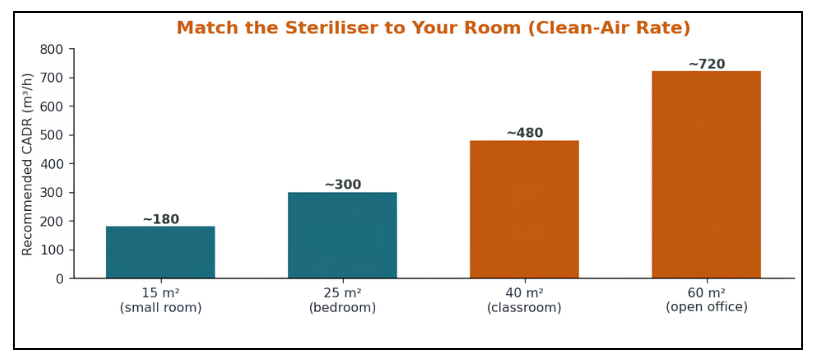
Then check the clean-air rate, often shown as CADR in cubic metres per hour. As a rule, you want the air in the room cleaned about five times an hour. This is called five air changes per hour, and it is a common target for busy rooms.
To get a rough figure, work out the room volume and multiply it by five. A unit rated below that number will struggle, while one rated above it gives you headroom on busy days. The chart below shows a simple target by room size.
After that, weigh up noise, filter costs and safety. A quiet, ozone-free unit with clear certification and honest test data is worth more than a loud bargain that needs costly filters. If a unit will sit in a bedroom or office, check its noise level on the setting you will actually use
Want help sizing a unit to your exact room? Talk to our team and we will point you to the right fit.
How much do air sterilisers cost to run?
Running cost comes from two things: the power the unit uses and the filters or parts it needs.
Most home units use about as much power as a light bulb or a small fan, so electricity is rarely the big cost. Filters are the part people forget. HEPA filters usually need changing every six to twelve months, and the prices add up over the years, so it pays to check them before you buy.
Light and ioniser units often have fewer parts to replace, which can make them cheaper to keep going. It is worth adding up the filter cost over three to five years before you decide, not just the sticker price.
Common mistakes to avoid
Most disappointment with air sterilisers comes down to a few simple errors.
-
Buying a unit that is too small for the room.
-
Running it on the lowest, quietest setting all the time.
-
Choosing an ozone unit for a space that people use.
-
Forgetting the cost and timing of replacement filters.
-
Expecting one unit to replace fresh air and good ventilation.
Avoid these and a decent unit will earn its place. Get them wrong and even a good product will let you down. A quick check of room size, setting and filters at the start saves a lot of frustration later.
Air steriliser, ventilation or light disinfection?
Visible antibacterial light is not instant. It lowers the germ count gradually over hours of use, not in a few seconds.
That is the trade-off for being safe around people. Instead of one strong blast, you get a gentle effect that runs the whole time the lights are on.
In practice this suits normal daily life well. A shop, ward or classroom keeps its lights on anyway, so the protection builds up through the day at no extra effort. You are not asked to change your routine; the light simply does its job in the background.
Is antibacterial light the same as UV disinfection?
No, and the difference matters. UV disinfection uses strong invisible light that damages a germ’s genetic code. It works fast, but it can burn skin and eyes, so rooms must be empty while it runs.
Antibacterial visible light is different. It uses safe, visible frequencies, so it can stay on all day while people are in the room. It is slower than UV, but it never has to stop, so the small effect adds up over many hours.
In short, UV is a fast clean for empty rooms, while visible light is steady protection for spaces that stay busy. Many people choose visible light for exactly that reason, and you can see why this kind of lighting suits everyday use.
What can antibacterial light do, and what can it not do?
These tools solve slightly different problems, and the best homes and buildings often use more than one.
Ventilation brings in fresh outdoor air and pushes stale air out. An air steriliser cleans the air that stays inside and keeps getting recirculated. Both help, and they work well together, especially in winter when windows stay shut.
There is also light-based surface disinfection, which lowers germs on surfaces and in the air using safe visible light, all day, with no filters. In practice, ventilation, an air steriliser and light disinfection form three simple layers of a healthier room, and you can add them one at a time as your budget allows.
Want help sizing a unit to your exact room? Talk to our team and we will point you to the right fit.
Where do air sterilisers help most?
They are most useful in busy indoor spaces where windows stay shut and lots of people share the air. That is where germs and dust build up fastest.
They suit clinics and healthcare settings, where clean air matters, and they help in homes and offices, especially for anyone with allergies, asthma or hay fever.
Shops, gyms, waiting rooms and meeting rooms are other good candidates. Anywhere the air feels stuffy or stale is worth a closer look. Homes near busy roads also benefit, since a good unit can trap some of the traffic dust that drifts indoors.
Frequently Asked Questions
Yes, good ones do. A unit that is the right size for the room can clearly cut airborne germs, dust and smells. Poor or undersized units do very little.
Filter and light-based units are generally safe for all-day use. Ozone generators are the main exception and should not run while people are in the room.
Many can reduce airborne viruses, but no unit removes every germ. They work best as one part of a wider plan that includes fresh air and cleaning.
Match the clean-air rate to your room size, aiming for about five air changes an hour. A larger or busier room needs a higher rate.
For steady results, run it whenever the room is in use, on a setting strong enough for the space. In busy rooms, many people simply leave it on all day, since a low steady run keeps the air clean without much noise.
Yes. A steriliser cleans indoor air, but it does not add fresh outdoor air. Good ventilation and a steriliser do different jobs and work best together.
Conclusion
Air sterilisers can be an effective way to reduce airborne germs, dust and odours, but choosing the right unit matters. The best results come from matching the system to your room size, checking its clean-air performance and choosing a safe, reliable option. Remember, an air steriliser does not replace fresh air or good ventilation. Used together, these solutions can help create cleaner, fresher and healthier indoor spaces.
If you are unsure which system is right for your home or workplace, Ermen Systems can help you find the right fit.
