Latest Blog
What Is Sick Building Syndrome? Causes, Symptoms & Prevention
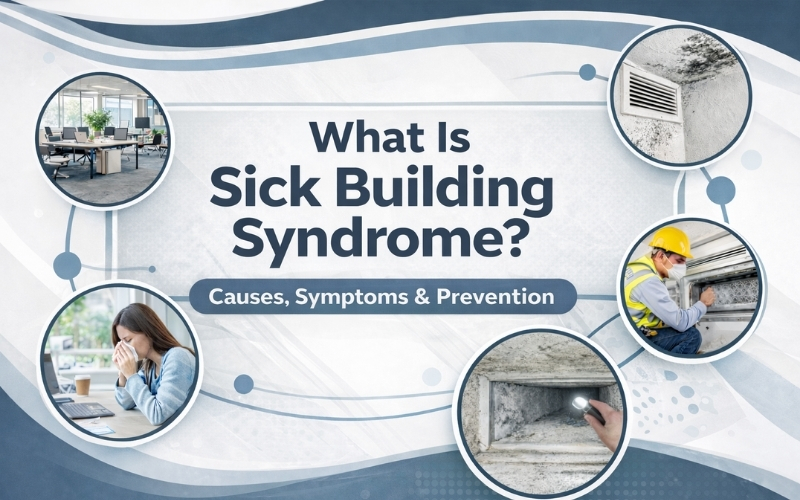
Sick Building Syndrome (SBS) is a growing concern in modern workplaces and homes, where poorly maintained indoor environments can trigger discomfort and health issues. Symptoms often include headaches, fatigue, irritation of the eyes, nose, or throat, and difficulty concentrating. While these symptoms are temporary, they can affect productivity and overall well-being. The causes are often linked to poor ventilation, energy-inefficient HVAC systems, and environmental factors within buildings.
In Ireland, promoting healthier indoor environments through energy-efficient HVAC and destratification is crucial. Understanding SBS helps people take steps to prevent it and create healthier indoor spaces.
What Is Sick Building Syndrome?
Sick Building Syndrome (SBS) means people feel unwell, like having headaches or feeling tired, when they are inside a building, even though they are not diagnosed with any illness. Common symptoms include headaches, tiredness, and irritation of the eyes, nose, or throat, which usually improve after leaving the building. SBS often occurs in offices, schools, and commercial buildings where ventilation, air quality, or humidity is poor. Recognising SBS is important because, even if symptoms seem moderate, it can affect comfort, health, and productivity.
Common Causes Of Sick Building Syndrome
Several environmental and structural factors can contribute to SBS. The primary causes include:
- Poor Ventilation
Inefficient airflow and poor fresh air supply can increase concentrations of pollutants and allergens. This is why modern solutions like commercial ventilation are critical to maintaining indoor air quality. - Energy-Inefficient HVAC Systems
Older or improperly maintained HVAC systems may fail to regulate temperature and humidity properly, leading to discomfort and promoting mould growth. - Chemical Pollutants
Cleaning agents, paints, cements, and office equipment can release volatile organic compounds (VOCs) that irritate respiratory systems. - Biological Pollutants
Mould, bacteria, and dust mites grow in damp areas with poor ventilation. - Poor Environmental Controls
A lack of humidity control, uneven heating, or poor air circulation can complicate SBS symptoms. Using tools like Airius destratification fans helps circulate air efficiently, mitigating these risks.
Common Symptoms of Sick Building Syndrome
SBS manifests in a variety of ways, often affecting multiple body systems. Common symptoms include:

- Headaches and breathing issues
- Fatigue and lethargy
- Eye, nose, or throat irritation
- Skin dryness or rash
- Difficulty concentrating
- Stress or respiratory discomfort
These symptoms typically appear after prolonged exposure in the building and improve once the person leaves the environment. Awareness of these early warning signs is essential for timely intervention.
How To Prevent Sick Building Syndrome
Improve indoor air quality with energy-efficient ventilation and HVAC solutions for healthier, more comfortable spaces.
Preventing SBS requires a proactive approach, combining technology, maintenance, and design improvements:
1. Optimize Ventilation
Upgrading to efficient commercial ventilation systems ensures a constant supply of fresh air, reducing pollutants and improving comfort for people.
2. Energy-Efficient HVAC Systems
Modern, sustainable HVAC solutions maintain optimal temperature and humidity levels while reducing energy consumption.
3. Healthy Building Technologies
Integrating environmentally conscious systems, such as Biovitae-led lighting, supports improved indoor hygiene.
4. Air Circulation
Using destratification fans, such as airius fans, promotes even air distribution, minimising temperature fluctuations and reducing stagnation.
5. Regular Maintenance
Routine inspections of air ducts, filters, and humidity controls prevent the buildup of mould and pollutants.
6. Energy-Efficient Air & Ventilation Solutions
Improving ventilation and using energy-efficient air circulation systems can help reduce the risk of sick building syndrome.
Essential Takeaways
Here are some essential takeaways for sick building syndrome:
- Sick Building Syndrome (SBS) can make people feel unwell and reduce comfort and productivity.
- Causes include poor ventilation, old HVAC systems, chemicals, and dust or mould.
- Solutions include energy-efficient HVAC, destratification, and low-energy air circulation solutions.
- Tools such as biovitae led lighting and airius destratification fans can play a major role in creating healthier spaces.
By addressing SBS through informed building design and technology, occupants in Ireland can enjoy safer, more comfortable, and productive indoor environments.
Frequently Asked Questions
SBS typically causes temporary symptoms, but prolonged exposure to poor air quality may contribute to chronic respiratory issues.
Proper ventilation reduces indoor pollutants and helps control humidity and temperature, maintaining a healthier environment.
Yes. Improving airflow, reducing VOC-emitting products, and maintaining HVAC systems can reduce SBS symptoms.
Monitor recurring symptoms such as headaches, fatigue, and eye irritation that improve after employees leave the building.
Final Thoughts
Sick Building Syndrome (SBS) can impact comfort, health, and productivity, even if symptoms seem mild. By understanding the causes, such as poor ventilation, outdated HVAC systems, and indoor defects, and implementing proactive solutions like energy-efficient HVAC, destratification, and sustainable practices, building occupants in Ireland can enjoy safer, healthier spaces. Tools like Biovitae LED lighting and Airius destratification fans are practical steps toward creating an optimal indoor environment.
Transform Your Building with Energy-Efficient Air & Lighting Systems
Create a healthier, energy-efficient building with tailored ventilation and air circulation solutions.
Take control of your indoor environment with Ermen Systems. Upgrade to energy-efficient HVAC, destratification, and advanced solutions like Biovitae LED lighting and Airius destratification fans to create safer, healthier, and more productive spaces.
