
Latest Blog
What Is Heat Recovery Ventilation (MVHR)? A Complete Beginner’s Guide
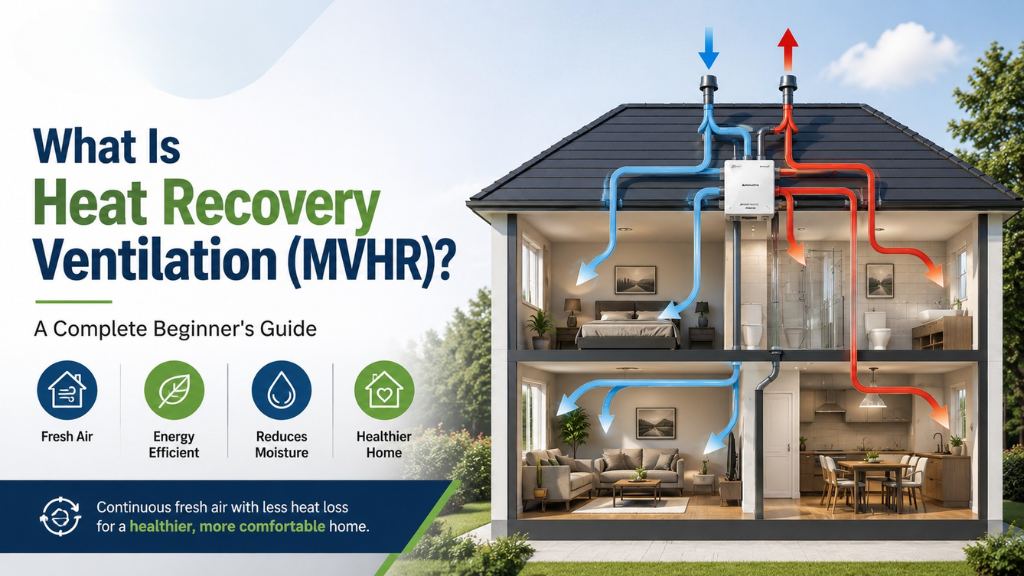
If your home feels stuffy, suffers from condensation, or loses warmth whenever you ventilate it, you may have heard about heat recovery ventilation. But what is a heat recovery unit, and how can it improve your home?
A heat recovery unit is designed to ventilate a property continuously while recovering much of the heat from outgoing indoor air. Instead of simply throwing warm air outside, the system transfers that heat to incoming fresh air, helping maintain a comfortable indoor temperature while improving ventilation.
For homeowners in Ireland, where keeping homes warm while controlling moisture is a constant challenge, this can make ventilation more efficient.
In this blog, we explain how heat recovery ventilation works, its main benefits, and the difference between whole-house and single-room systems.
What Is A Heat Recovery Unit?
A heat recovery unit is a ventilation device that removes stale indoor air and brings fresh outdoor air into a property while recovering heat from the extracted air.
The basic principle is straightforward.
Warm, stale air inside your home contains heat. A heat recovery unit captures much of that heat before the air is expelled outdoors. At the same time, fresh outdoor air enters the system and is warmed before being supplied back into the room or home.
This means you can ventilate your home without relying entirely on open windows or losing all the warmth produced by your heating system.
A typical heat recovery system also helps remove excess moisture, odours, and airborne pollutants, supporting better indoor air quality.
How Does Heat Recovery Ventilation Work?
A mechanical ventilation system with heat recovery works by continuously exchanging indoor and outdoor air.
The process can be broken down into four steps:
Stale air is extracted.
Warm air containing moisture, odours, and indoor pollutants is drawn out of the home.
Heat is captured.
Before the extracted air leaves the property, its heat passes through a heat exchanger. The heat is retained rather than being completely lost outdoors.
Fresh air enters.
Fresh air from outside is drawn into the ventilation system and filtered before entering the home.
Recovered heat warms the incoming air.
The heat stored in the exchanger is transferred to the incoming air. You therefore receive fresh air that is closer to your indoor temperature.
The result is continuous ventilation with less unnecessary heat loss.
Why Do Homes Need Heat Recovery Ventilation?
Modern homes are increasingly designed to be energy efficient and airtight. Better insulation and reduced uncontrolled air leakage can help retain heat, but they also make purposeful ventilation more important.
Without sufficient ventilation, moisture from everyday activities can build up.
Cooking, showering, drying clothes, and even breathing release moisture into the air. If that moisture remains inside the home, it can contribute to condensation, damp conditions, and mould.
A heat recovery ventilation system tackles the problem at its source by continuously removing stale and moisture-laden air while supplying fresh air.
For example, imagine a family home where condensation regularly appears on bedroom windows in the morning. Opening the windows may remove some moisture, but it also allows heated air to escape. A heat recovery unit provides a more controlled way to exchange that air.
Explore Ermen Systems’ single-room heat recovery ventilation units for improving indoor air quality without extensive ductwork.
What Are The Main Benefits Of A Heat Recovery Unit?
Here are some important benefits of a heat recovery unit:
Better indoor air quality
Continuous ventilation helps remove stale air, odors, moisture, and other indoor pollutants while introducing fresh, filtered air.
This is particularly useful in bedrooms, living areas, and other rooms where people spend long periods of time.
Less heat wasted through ventilation
Traditional ventilation can remove warm indoor air and replace it with cold outdoor air.
Heat recovery reduces this thermal loss by transferring heat from outgoing air to incoming air. Some systems available through Ermen Systems can recover up to 90% of heat, depending on the model and operating conditions.
Better moisture and condensation control
Excess humidity is one of the biggest ventilation problems in homes.
By continuously extracting moisture-laden air, heat recovery ventilation can help create a drier indoor environment and reduce the conditions that encourage condensation and mould.
Continuous ventilation without opening windows
You do not have to choose between fresh air and keeping your windows closed.
A ventilation system can provide controlled air exchange without requiring windows to remain open, which can also help reduce outside noise entering the home.
Lower energy consumption
Because heat is recovered instead of simply discarded, ventilation can be carried out more efficiently. Low-power ventilation motors can further reduce the energy required to operate the system.
Centralised MVHR vs. Single-Room Heat Recovery
Not every home needs the same ventilation solution.
A centralised MVHR system is designed to ventilate multiple areas of a property through a network of ductwork. It can be highly effective for suitable new-build or major renovation projects, but installing ductwork in an existing home can be disruptive and expensive.
A single-room heat recovery unit takes a different approach.
Instead of connecting the entire property through extensive ductwork, individual units are installed directly through external walls. This makes decentralised heat recovery particularly useful for retrofit projects where installing new ductwork is impractical.
Ermen Systems describes its single-room solutions as a practical retrofit option, with units designed to continuously replace stale air with fresh, heated air without complicated ductwork.
Multiple units can also be installed in different rooms and coordinated as part of a wider ventilation setup.
Not sure whether a whole-house MVHR system or single-room heat recovery is right for your property? Contact Ermen Systems for expert advice on choosing the right ventilation solution.
Where Can A Single-Room Unit Be Useful?
Single-room heat recovery can be particularly useful in areas where ventilation problems are concentrated.
Bathrooms
Bathrooms generate significant amounts of moisture during showers and baths. Continuous ventilation can help remove humid air before it spreads throughout the property.
Bedrooms
Bedrooms can become stuffy overnight because several hours of breathing can increase humidity and reduce perceived air freshness.
Kitchens
Cooking produces moisture, odours, and airborne pollutants. Effective ventilation helps remove these contaminants from the indoor environment.
Living rooms
A living room that regularly feels stale can benefit from a continuous fresh-air supply without relying on open windows.
The right solution depends on room size, ventilation requirements, existing construction, and the overall condition of the property.
What Is Fantini Cosmi Ecocomfort?
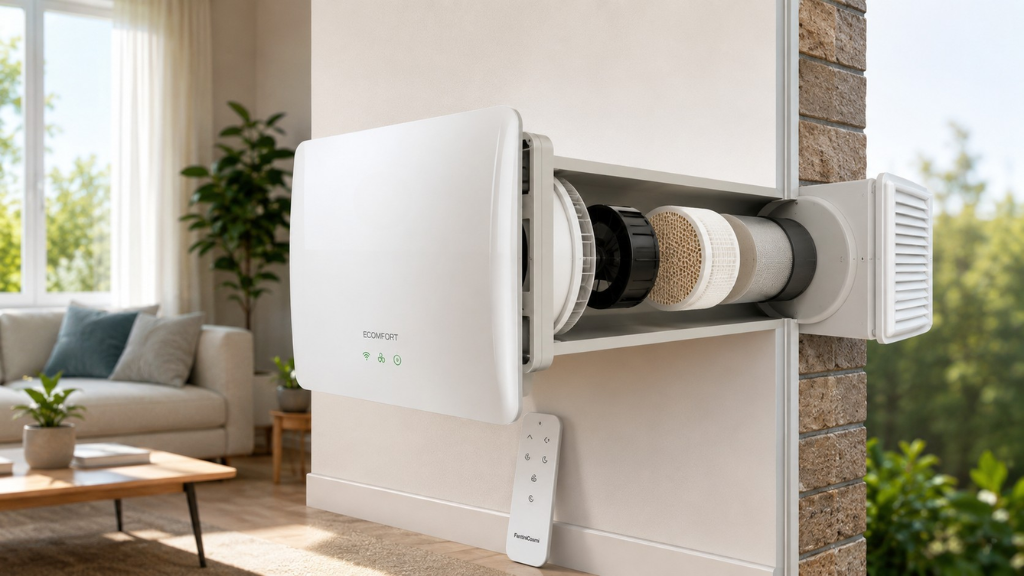
Fantini Cosmi Ecocomfort is a decentralised heat recovery ventilation range available through Ermen Systems.
The system uses a ceramic heat exchanger to store heat from extracted indoor air and release it during the incoming-air cycle. The range includes wireless control, low-power DC brushless motors, and built-in sensors, depending on the model.
The newer ECOCOMFORT 2.0 SMART, for example, can monitor factors including temperature, humidity, air quality, and VOC levels, while allowing control through the Intelliclima+ app.
This type of technology can be particularly attractive to homeowners looking for a practical ventilation solution without installing a large central duct network.
Is Heat Recovery Ventilation Right For Your Home?
A heat recovery unit may be worth considering if your home has one or more of these problems:
- Persistent condensation on windows
- Recurring mould caused by excess moisture
- Rooms that feel stuffy
- Poor air circulation
- Excess humidity
- A need for continuous ventilation
- Difficulty ventilating without losing heat
- A retrofit project where installing extensive ductwork is impractical
The key is choosing the right type and size of system rather than assuming that one solution suits every property.
For a new build or major renovation, a whole-house MVHR system may make sense. For an existing home with specific problem rooms, decentralised single-room ventilation can offer a less disruptive alternative.
Frequently Asked Questions
A heat recovery ventilation system removes stale, moisture-filled indoor air and brings in fresh outdoor air while recovering heat from the extracted air.
Yes. By continuously removing excess moisture from indoor air, heat recovery ventilation can help reduce condensation and the conditions that may contribute to mould.
MVHR usually ventilates the whole property through a network of ducts, while single-room heat recovery units ventilate individual rooms without requiring extensive ductwork.
Yes. Single-room or decentralised heat recovery units can be particularly suitable for existing homes and retrofit projects where installing a central ducted system may be difficult.
Final Thoughts
A heat recovery unit provides a smarter way to ventilate a home: remove stale, moisture-laden air, bring in fresh air, and recover valuable heat in the process. For Irish homeowners, it can help address condensation, indoor air quality, and unnecessary ventilation heat loss. The right choice depends on your property, rooms, and ventilation requirements, so consider both whole-house and single-room options before deciding.
Expert air purification and ventilation solutions designed to create cleaner, healthier indoor environments.
Improve Your Home’s Ventilation With Expert Advice
Explore practical heat recovery ventilation solutions from Ermen Systems and find a system suited to your home, from single-room retrofit options to advanced MVHR technology.
