
Latest Blog
Best HVAC Systems for Small Homes and Apartments
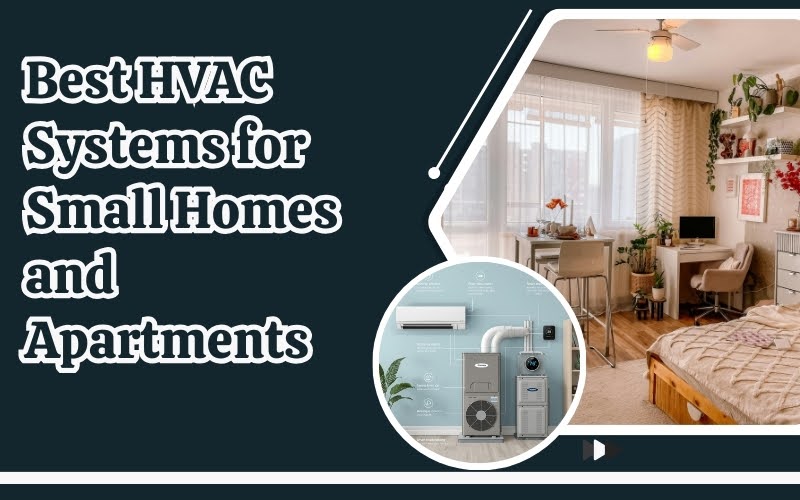
If you want the best HVAC system for a small home or apartment, the winning formula is usually ventilation-first: bring in fresh, filtered air without dumping the heat you already paid for, then add targeted heating/cooling only where you actually need it. In practice, that means choosing between a whole-building heat-recovery approach or a room-by-room heat-recovery approach, depending on whether you can run ducting and how disruptive the retrofit can be.
Small homes and flats have a predictable set of pain points: sealed windows, better insulation, less natural airflow, and moisture from cooking/showers that has nowhere to go. That’s why “HVAC” in compact spaces shouldn’t start with “what’s the strongest unit?”
It should start with: how do we control humidity, odours, and indoor pollutants, quietly, efficiently, and with minimal space? A modern mechanical ventilation system with heat recovery can do that while helping reduce heat loss.
What Should The Right Setup Achieve In A Small Space?
A small-home/apartment-friendly setup should deliver these outcomes (use this as your “must-have” checklist):
- Fresh air without drafts
- Continuous, balanced airflow instead of “open a window and hope.”
- Humidity control
- Reduce condensation risk behind wardrobes, in corners, and around cold bridges
- Lower energy waste
- Recover heat from extracted air rather than exhausting warmth outdoors
- Low noise
- Bedrooms and living rooms need quiet, steady operation
- Minimal space + minimal disruption
- Many flats can’t accommodate extensive duct runs
- Easy control
- Sensors and smart control can prevent “set-and-forget” problems (like over-ventilating in winter)
Why Do Small Homes And Flats Struggle With Air Quality And Moisture?

Because “small” amplifies everything:
- Cooking odours spread faster.
- A single shower can spike humidity across the whole flat.
- Drying laundry indoors adds moisture load.
- Airtight upgrades reduce natural leakage ventilation.
The result is often the same pattern:
- Condensation on windows.
- Musty smells in bedrooms.
- Mould risk behind furniture and on colder walls.
- Stuffy air in rooms with closed doors.
This is where mechanical ventilationbecomes the stabiliser: it keeps air moving based on need rather than habits.
Which System Type Fits Your Home: Whole-Building Or Room-By-Room?
Think of it as two practical routes:
Route A: Room-by-room heat recovery (best for many flats and retrofits)
Choose this when:
- You can’t run ducting easily (leasehold constraints, limited ceiling voids).
- You want the option to start with one problem room (bedroom, bathroom, kitchen-adjacent space).
- You want a scalable plan: add another unit later without rebuilding the system.
This is often described as decentralised heat recovery ventilation (single-room heat recovery units through an external wall).
Route B: Whole-building heat recovery (best for small houses and some full refurbs)
Choose this when:
- You’re doing a renovation or new build where ducting can be planned neatly.
- You want consistent ventilation across all habitable rooms.
- You can allocate space for the main unit and duct runs.
This is the classic whole-house MVHR approach (balanced supply and extract).
When Does A Room-By-Room Approach Make More Sense?
If you live in a flat or a compact terrace where disruption matters, a room-by-room approach is often the most realistic path.
What it looks like in real homes:
- Start where the pain is highest
- Bedroom (stuffy sleep), bathroom (humidity), or living room (general comfort).
- Install through the perimeter wall
- No whole-house duct network required.
- Use smarter control so it reacts to real conditions
- Options can include sensors and app-based management (temperature/humidity/VOC-style triggers).
Examples of room-by-room solution characteristics that suit small spaces:
- High heat recovery up to ~90% class performance on certain unit types.
- Quiet, low-power DC motors.
- Integrated sensing (humidity, air quality, temperature).
- Expandable setups (master + additional units managed together).
When Is A Whole-Building Approach The Better Fit?
Whole-building MVHR is a strong fit if:
- You’re renovating a small house and can route ducting efficiently.
- You want balanced ventilation everywhere (not just “problem rooms”).
- You want one centralised filter/maintenance point.
What to expect:
- A dedicated unit supplies fresh air and extracts stale air continuously.
- Heat recovery reduces the penalty of constant ventilation.
- Planning matters: duct routes, intake/exhaust locations, commissioning.
A simple rule:
- If ducting is easy, the whole building can be excellent.
- If ducting is painful, room-by-room is usually the better “small home” decision.
What If You Need Humidity Control More Than Anything Else?
If condensation and damp feel like the real enemy, prioritise ventilation that is designed to respond to:
- Humidity changes.
- Temperature changes.
- Air quality signals.
A ventilation approach with dehumidification support is designed around the reality that modern insulation can trap moisture indoors, especially in renovated flats where natural ventilation has been reduced.
What If You Want Ventilation Plus Active Heating/Cooling From One Unit?
Some compact systems combine ventilation with active thermal control features (useful when space is limited and you want a consolidated approach rather than separate equipment).
If you’re evaluating this route, compare:
- Airflow capacity (so it can actually serve the intended area).
- Control features (setpoints, sensors, Wi-Fi/app control).
- Filtration class and maintenance alerts.
What Features Matter Most When Comparing Options?
Use this “spec-first” comparison list (this is where most people accidentally overpay):
- Heat recovery performance
- Aim for high recovery in cold months, when ventilation normally “feels expensive.”
- Noise levels
- Especially in bedrooms, look for quiet, continuous operation claims and verified figures where available.
- Sensors and controls
- Humidity and air quality triggers can prevent both under- and over-ventilation.
- Filtration
- Useful for urban flats near traffic and for general indoor air quality management.
- Installation reality
- Perimeter-wall install vs duct network (cost and disruption).
- Maintenance simplicity
- Filter access and clear service indicators matter more in small homes than people expect.
How Do You Size And Plan A Setup Without Overpaying?
Instead of starting with “unit brand,” start with a simple plan:
- Step 1: Identify the driver
- Stuffy bedrooms? Condensation? Odours? Allergies? Summer overheating?
- Step 2: Map the layout
- Number of habitable rooms, where moisture is generated, and whether rooms are closed off.
- Step 3: Choose architecture
- Whole-building vs decentralised heat recovery ventilation.
- Step 4: Phase the rollout
- In flats: start with 1–2 rooms; expand if results justify it.
- Step 5: Make sure controls match behaviour
- If you won’t touch settings, favour systems that adapt automatically.
This approach aligns closely with what authoritative guidance focuses on: ventilation has to match real occupancy and real building conditions, not assumptions.
What Does A Good Installation And Maintenance Plan Look Like?
A good outcome is usually less about “the fanciest unit” and more about doing the basics correctly:
- Placement that supports airflow
- Put the solution where it can actually influence the room (not blocked by furniture).
- Commissioning
- Ensure flows and modes match the room’s purpose (sleeping vs cooking vs bathing).
- Filter routine
- Treat filters like a normal household task, not a once-a-decade surprise.
- Seasonal settings
- Winter: protect heat while ventilating.
- Summer: maintain comfort and air freshness without running harder than necessary.
What's The Simplest Way To Get A Recommendation That Fits Your Layout?
If you want an answer that’s genuinely “best” for your small home or apartment, the shortest path is:
- Describe your property type (flat / terrace / semi).
- List your top 2 issues (mould, stuffy sleep, odours, humidity, comfort swings).
- Confirm whether ducting is realistic.
- Decide whether you want room-by-room scaling or a whole-building plan.
From there, you can match to solutions that focus on:
- Heat recovery ventilation (whole-house or single-room).
- Humidity-responsive mechanical ventilation.
- Compact ventilation with heating/cooling where appropriate.
FAQs
The best HVAC system for small homes usually prioritises ventilation first, especially heat recovery ventilation, then adds targeted heating or cooling where needed.
Yes. A mechanical ventilation system with heat recovery helps control humidity, improve air quality, and reduce heat loss, which is especially valuable in airtight flats.
Decentralised heat recovery ventilation is ideal when ducting is difficult or disruptive, such as in apartments, leasehold properties, or retrofits.
In many cases, yes. Properly designed mechanical ventilation can stabilise humidity levels and prevent condensation without relying on constant window opening.
Conclusion
Choosing the best HVAC system for a small home or apartment is less about raw heating or cooling power and more about controlling air quality, moisture, and heat loss efficiently. Ventilation-first solutions, whether whole-building or room-by-room, address the core issues compact spaces face every day. When systems are selected based on layout, disruption limits, and real occupancy needs, they deliver better comfort, lower energy waste, and healthier indoor environments over the long term.
Ready to Choose the Right HVAC System for Your Space?
If you’re deciding between whole-house heat recovery, decentralised ventilation, or a compact combined solution, a layout-based assessment can save you from overpaying or overbuilding. Talk to a specialist, like Ermen Systems, who understands small homes and apartments, to get a setup that actually fits how you live.
