
Latest Blog
What Is a Single Room Heat Recovery Unit?
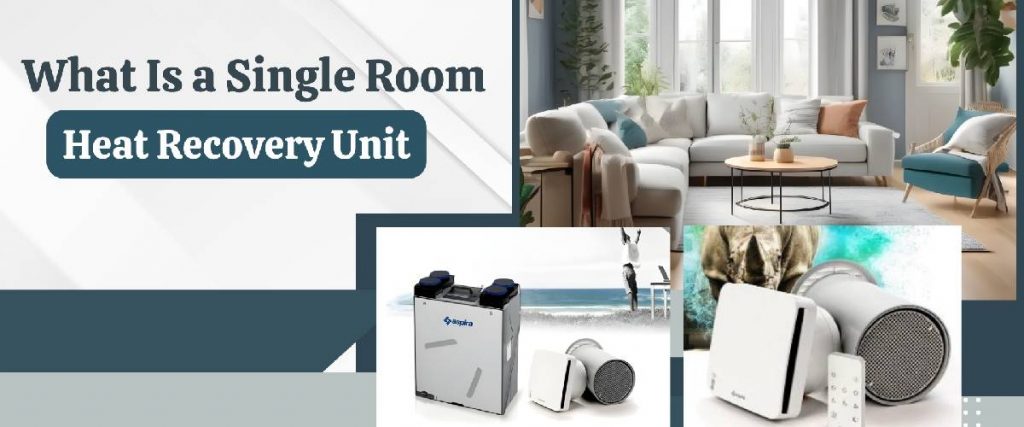
A single-room heat recovery unit is a compact ventilation system designed to serve just one room (or zone) rather than an entire dwelling. It extracts stale air from that room (e.g., bathroom, kitchen, bedroom), captures much of its heat via a heat exchanger, and then uses that heat to warm the incoming fresh air. The result: continuous ventilation with minimal heat loss.
This makes single-room systems an efficient, flexible option, especially where full house ducting isn’t feasible.
Why Use One Room Heat Recovery? (Benefits & Use Cases)
A one-room heat recovery unit is a smart and practical way to improve ventilation without wasting heat. It keeps your room fresh, comfortable, and energy-efficient, all while being easy to install and maintain.
- Energy Efficiency & Heat Savings: By recovering heat from outgoing air, these units can reclaim up to ~70–80% of thermal energy, reducing the extra heating energy needed.
- Improved Indoor Air Quality: They continuously extract moisture, pollutants, and stale air while ensuring a supply of fresh air, helping to reduce condensation, mould, and odours, especially in wet rooms.
- Retrofitting Flexibility: In many UK homes, installing ducting for a full mechanical ventilation with heat recovery (MVHR) system is impractical or invasive. A single room unit offers a lower-disruption alternative.
- Lower Upfront Cost / Scalability: Because they serve one room, the capital outlay is less. You can start with problem rooms and possibly expand or integrate later into a perfect ventilation system.
- Targeted Use: They are ideal for wet rooms (bathrooms, kitchens), utility rooms, and isolated spaces where moisture or humidity is a big concern.
How a Single Room Heat Recovery Unit Works
A single-room heat recovery unit quietly replaces stale indoor air with fresh outdoor air while keeping most of the warmth inside. It does this through a small built-in heat exchanger and smart airflow control, so your room stays ventilated without losing heat or comfort.

Alternate-flow / Cyclic Operation
Most units operate in a cyclic or alternate-flow mode. Typically, they switch between extraction and supply every ~30–90 seconds (e.g., 70 seconds). During extraction, stale warm air passes out through the heat exchanger core, warming it. Then the flow reverses, and the fresh air being drawn in passes across that warmed core, recovering heat. This cycle repeats continually.
Some variants use dual fans or continuous balanced extraction/supply designs, but the cyclic style remains common for simplicity and compactness.
Core / Heat Exchanger
The heart is a ceramic or tubular heat exchanger (core) that stores thermal energy temporarily, enabling heat transfer between the outgoing and incoming flows. Efficiency depends on material, design, airflow symmetry, and thermal losses.
Fans, Sensors & Controls
- Two fans (or reversible fans) handle the alternating flows.
- Humidity sensors, timers, or CO₂ detectors may adjust speeds or cycle times.
- Blauberg offers smart control/ WiFi features in some models.
Where to Use It: Ideal Rooms & Retrofit Scenarios
Single-room heat recovery units are versatile and can be fitted almost anywhere fresh air and moisture control are needed. They’re especially useful when a full-house ventilation system isn’t practical, offering targeted comfort and energy savings for specific areas.
Bathrooms, Kitchens & Utility Rooms
These rooms generate high moisture and pollutants, making them prime candidates. Replacing or upgrading existing extract fans with a heat recovery unit can yield benefits while using existing wall penetrations.
Bedrooms, Living Rooms & Combined Zones
In larger or more open spaces, a single-room unit may be underpowered. But modern units support higher airflow rates suitable for living spaces, too.
Multiple Units & Networked Systems
You can install multiple single-room units in different rooms and coordinate them (e.g., via WiFi or control panels) so they behave more like a mini networked ventilation system.
When to Choose a Single Room vs a Whole-House MVHR
| Feature | Single Room Heat Recovery Unit | Whole-House MVHR / Central HRV |
|---|---|---|
| Upfront cost | Lower (per room) | Higher due to the duct network |
| Disruption / retrofit friendliness | Easier, less invasive | More disruptive in existing homes |
| Energy efficiency (overall) | Good for targeted zones | Better for whole dwellings, recover more heat overall |
| Scalability | Can add room by room | Designed holistically |
| Control complexity | Simpler | More components, balancing |
| Best use case | Individual bathrooms, kitchens, problem rooms | New builds, entire houses, sealed modern homes |
Often, a hybrid approach works: start with single-room units and later integrate into a full MVHR network, a strategy that suits a staged upgrade or a Perfect Ventilation System approach.
Return on Investment & Cost Considerations
Energy Savings & Payback
Savings depend on choices like recovery efficiency, local heating costs, and running hours. Typical units may save a notable fraction of heating energy in the treated room. Studies report that efficient heat recovery ventilation can reclaim 60% or more heat in optimal setups (for whole-house systems).
Payback periods for single room units in UK settings can range from several years up to a decade, depending on use, electrical vs gas pricing, and maintenance costs.
UK Regulatory & Efficiency Context
In the UK, building regulations and energy standards increasingly demand controlled ventilation for new builds. While more attention is on whole-house MVHR, single-room units help meet local ventilation requirements at a lower cost. Use certified units, follow compliance (e.g., Part F in England), and document performance to meet inspection criteria.
Summary & Next Steps
A single-room heat recovery unit offers a practical, flexible, and energy-aware solution for ventilating individual rooms without needing full ductwork. For homeowners and professionals alike, it’s a compelling option, especially as part of a modular Perfect Ventilation System strategy.
If you’re considering adding one in your home or retrofit project, Ermen Systems can consult on selecting a model, integrating with other ventilation elements, or planning staged upgrades. Whether you’re addressing condensation in a bathroom or improving air quality in living spaces, a smart, balanced heat recovery approach pays dividends.
Frequently Asked Questions
Can I open windows while a single-room heat recovery unit is functioning?
You can, but it may disrupt the airflow balance and reduce efficiency. Occasional window opening is fine, but keeping them open for long periods may counteract the energy savings.
Does it cool the room in summer?
It’s not an air conditioner. However, many units incorporate a bypass mode, allowing cool fresh air to enter without passing through the heat exchanger when outside air is cooler than inside, giving some relief.
What is “efficiency” in real operation?
Efficiency measures how much of the heat from outgoing air is transferred to incoming air. Real-world values might be slightly less than lab specs due to leaks, imbalances, or maintenance issues.