Latest Blog
Improving Workplace and Kitchen Hygiene: A Practical Guide
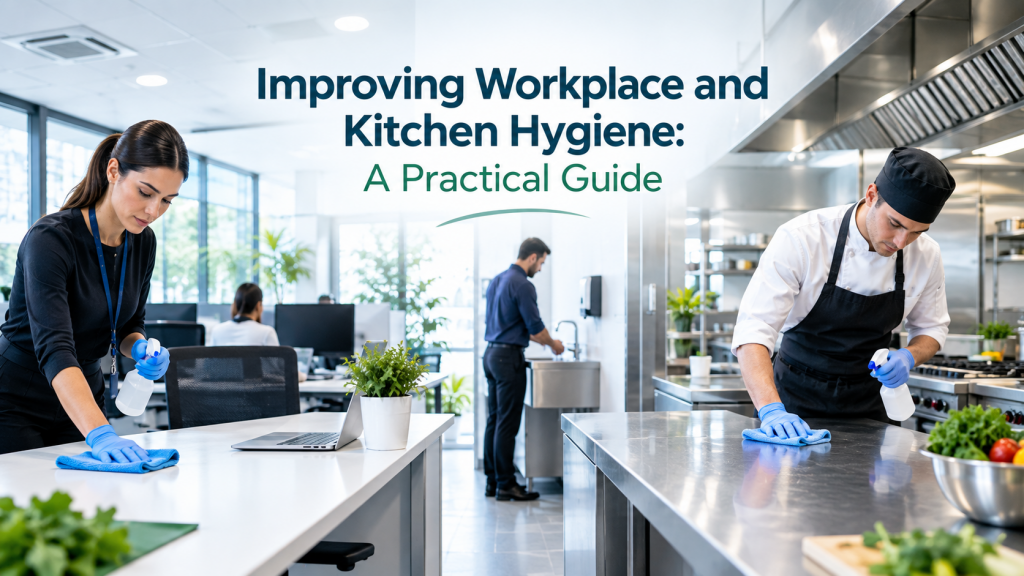
To improve workplace hygiene, focus on a few clear things: clean high-touch areas often, keep food areas safe from cross-contamination, make sure air flows well, and build habits the whole team follows every day.
A cleaner workplace means fewer sick days and better focus. In a kitchen or food business, good hygiene also protects your customers and your reputation.
This guide gives you practical steps for both the office and the kitchen, plus simple tools that keep working in the background. Everything here is easy to start, and most of it costs little or nothing.
Want a healthier workplace with less effort? Ask Ermen Systems about tools that support daily hygiene.
Why does workplace hygiene matter?
Poor hygiene at work spreads bugs fast. One unwell person touching shared surfaces can pass a cold around a whole team in a matter of days.
That costs money through sick days and lost focus. It also affects how staff feel, since nobody enjoys working in a grubby space.
For food businesses the stakes are higher. Weak kitchen hygiene can cause illness, fail an inspection and damage trust that took years to build.
There is also a legal side. Employers have a duty to provide a safe, clean place to work, and food businesses must meet strict food-safety rules.
Where are the germ hotspots at work?
Germs gather where many hands meet and where food is handled. Knowing these spots tells you where to clean first.
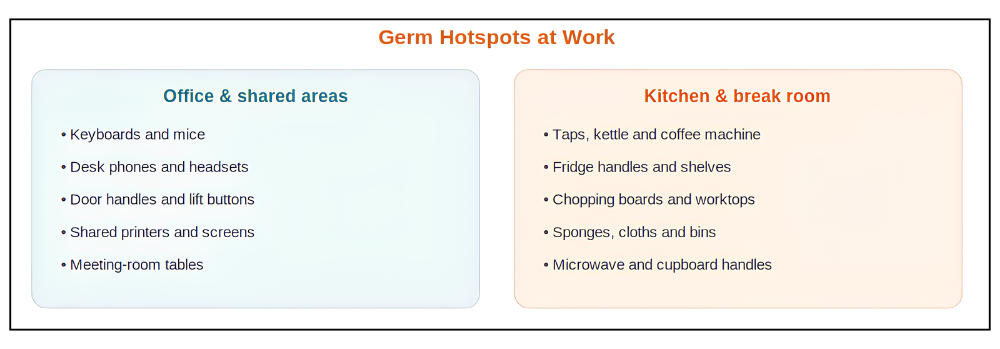
In the office, keyboards, phones, door handles and lift buttons see the most contact. In the shared kitchen, taps, the fridge handle, sponges and worktops are the ones to watch.
Desks are worth a special mention. Many people eat at their desk, so crumbs and spills mix with everyday germs. A quick daily wipe of your own desk makes a real difference.
How do you keep a shared office kitchen clean?
The staff kitchen is often the least-cleaned room in a workplace, yet everyone uses it, and food is involved. A simple system fixes most of the problem.
-
Set a cleaning rota so the job is shared, not left to one person.
-
Wipe worktops, the kettle and the coffee machine every day.
-
Clear the fridge weekly and bin old food before it spoils.
-
Replace sponges and cloths often, and let them dry between uses.
-
Empty bins daily so smells and germs do not build up.
None of this is hard. It just needs to be someone’s clear job, written down where people can see it.
A shared kitchen only works if everyone plays their part. A friendly note on the wall about washing your own cup goes a long way toward keeping the peace and the space clean.
Struggling to keep staff areas clean and fresh? Talk to our team about air and hygiene options for your workplace.
Commercial kitchen hygiene: the essentials
A commercial kitchen has stricter rules, because you are cooking for the public and the risks are higher. Most food-safety problems come down to four basics, often called the four Cs.
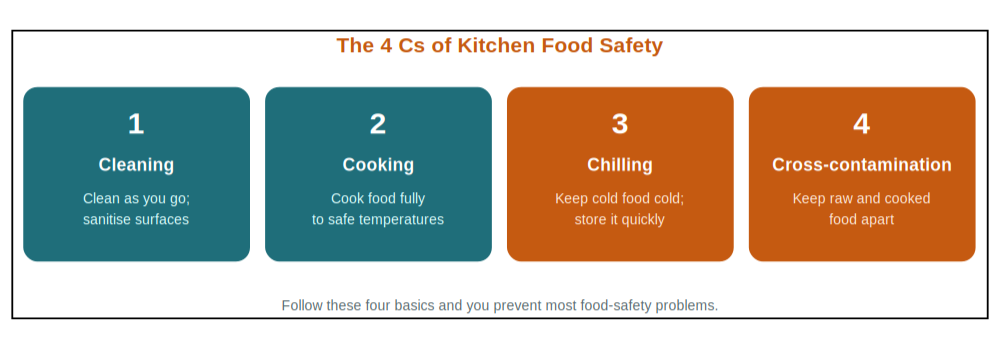
Clean as you go, cook food fully, chill cold items quickly, and keep raw and cooked food apart. Use colour-coded boards and knives to stop raw meat ever touching ready-to-eat food, which is one of the most common causes of food poisoning.
Good personal hygiene sits behind all four. Regular handwashing, clean uniforms and staying home when ill are the habits that hold the whole system together.
Storage matters too. Keep raw meat on the bottom shelf so it cannot drip onto other food, label items with dates, and follow first-in, first-out so nothing is forgotten at the back.
A written food-safety plan, such as a simple HACCP-style checklist, keeps everyone on the same page. It also makes inspections far easier, because you can show what you do and when.
What hygiene habits should every worker follow?
Tools and rotas help, but daily habits do most of the work. A few simple ones make the biggest difference.
-
Wash hands properly after the toilet, before food and after handling waste.
-
Use hand sanitiser at entrances and near shared equipment.
-
Cover coughs and sneezes, and stay home when genuinely unwell.
-
Keep personal items off shared food and prep surfaces.
When these become second nature, the whole workplace stays cleaner with far less effort from anyone. Habits, not one-off deep cleans, are what keep a place healthy over time.
Ready to strengthen infection control at your facility? Contact Ermen Systems for advice and a plan for your site.
How do airflow and lighting help hygiene?
Two things people forget are the air in the room and the light they clean by. Both quietly shape how hygienic a space really is.
Fresh air and good extraction clear steam, smells and airborne germs, and they stop a room feeling stuffy by mid-afternoon. There are air comfort options for offices, and air purification for hospitality kitchens that keep busy food areas fresher.
Bright, even light also helps, because staff clean better when they can see clearly. A dark corner is where grime and grease build up unnoticed. In food areas, antibacterial lighting for kitchens adds a quiet layer that lowers germs on surfaces all day.
How do you build a hygiene routine the team follows?
The best plan is one your team actually sticks to. Keep it simple and make it visible.
Write a short checklist for daily, weekly and monthly tasks, and put it where people work, not filed away in a drawer. Give each task an owner, and train new starters so standards do not slip over time.
Quick signs by sinks and bins act as helpful reminders. Small nudges like these keep good habits going long after the first push.
Check the routine every so often, too. A short monthly review shows what is working, what gets skipped, and where a task needs a new owner.
Common workplace hygiene mistakes to avoid
A few simple slips undo a lot of good work. These are the ones to watch for.
-
Leaving the staff kitchen to ‘whoever gets to it’, so nobody does.
-
Using the same cloth all over, which just spreads germs around.
-
Overloading the fridge so air cannot circulate and food warms up.
-
Relying on one big clean instead of little and often.
-
Forgetting high-touch items like phones, handles and switches.
Fixing these is cheap and quick, and it lifts your standards straight away.
Where does good hygiene pay off across a business?
Every workplace gains, but some feel the benefit more than others.
Offices see fewer sick days and a fresher feel in shared staff areas. Shops and retail and shop floors gain cleaner spaces that customers notice and quietly trust.
Cafes, restaurants and food producers gain the most, since hygiene is central to their trade and their licence to operate. You can fit the range of antibacterial light fittings to match any of these spaces.
Frequently Asked Questions
Clean high-touch areas daily, keep the staff kitchen tidy, improve airflow, and set a simple routine that everyone follows. Small, regular steps work best.
Keyboards, phones, door handles, lift buttons, shared printers and kitchen taps get touched most, so they need cleaning most often.
Yes. Fresh air and good extraction clear steam and airborne germs, which keeps rooms healthier and more comfortable to work in.
It is shared. Employers provide clean facilities, tools and training, while each worker follows daily habits. Both parts are needed for it to work.
They can. They lower germs on surfaces and in the air all day, working alongside normal cleaning rather than replacing it.
Conclusion
Good workplace and kitchen hygiene does not have to be complicated. Regular cleaning, safe food handling, good airflow and simple daily routines can make a noticeable difference to the health and comfort of your workplace. The key is to make hygiene part of the everyday routine rather than relying on occasional deep cleaning.
With practical solutions and the right approach, Ermen Systems can help businesses create cleaner, healthier and more comfortable working environments.
