
Latest Blog
How UV Light Disinfection Works (and a Safer Alternative)
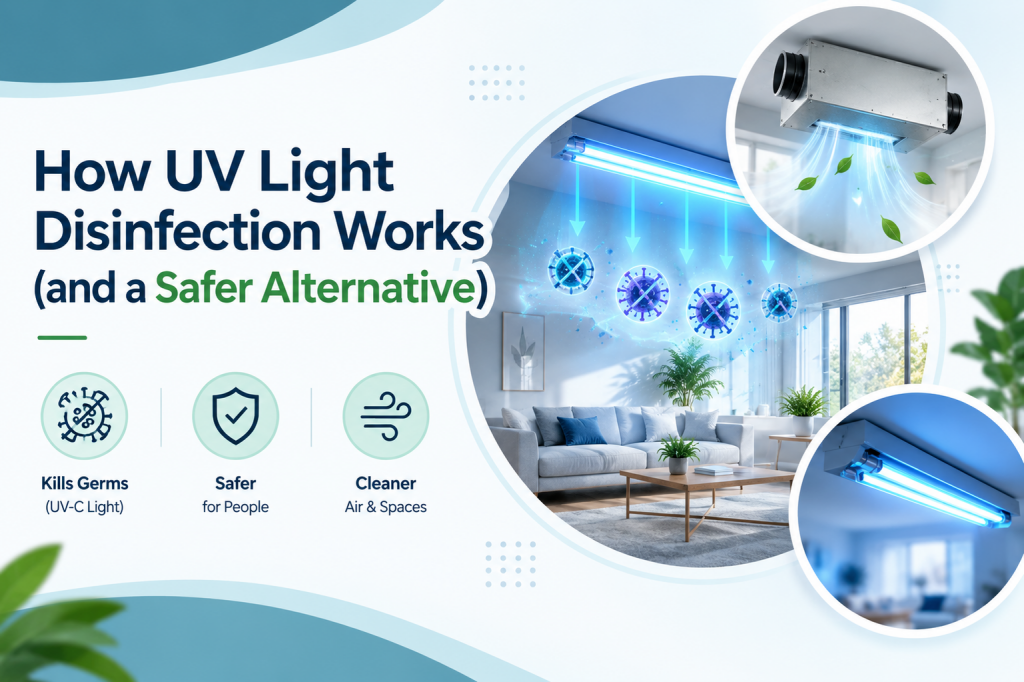
UV light disinfection uses ultraviolet light, mainly UV-C, to kill germs on surfaces, in water and in the air. The light damages the DNA and RNA inside bacteria and viruses, so they can no longer work or multiply.
It is powerful and fast, which is why hospitals and water plants have used it for years. But UV-C has one big drawback. It is not safe to use around people, so rooms must be empty while it runs.
That is a real problem for places that are busy all day, such as clinics, shops, offices and schools. You cannot keep clearing the room every time you want to clean the air.
This guide explains how UV light disinfection works, where it is used, and a safer, always-on option you can run while a room is still in use.
Want cleaner air and surfaces without emptying the room first? Contact Ermen Systems to ask about safe, people-friendly disinfection lighting.
What is UV light disinfection?
Ultraviolet (UV) light sits just beyond the violet end of the light we can see. It comes in three main bands: UV-A, UV-B and UV-C.
UV-C has the shortest wavelength and the most energy, and it is the band used for cleaning. Around 254 nanometres is the classic germicidal wavelength.
UV-C is often called germicidal light because it can inactivate bacteria, viruses, mould and other microbes. It has been used this way since the early 1900s, and most systems today use low-pressure mercury lamps or UV-C LEDs.
A newer type called far-UV-C, around 222 nanometres, is being studied as a gentler option. Early results look promising, but it is still new and not yet common in everyday buildings.
How does UV light kill germs?
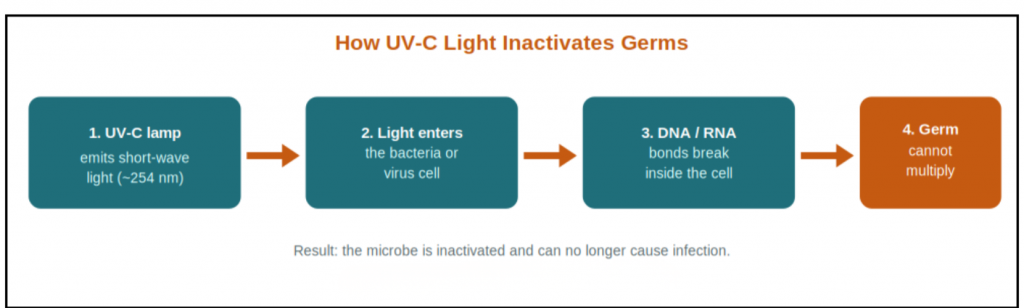
The process is simple to picture. A UV-C lamp gives off short-wave light. That light lands on a microbe and passes into its cell.
Inside the cell, the energy breaks the bonds in the microbe’s DNA or RNA. Once the genetic code is damaged, the microbe cannot repair itself or copy itself.
It is then classed as inactivated, which means it can no longer cause infection. Research shows UV-C can inactivate more than 99.9% of many common germs when the dose is right.
The dose is simply the strength of the light multiplied by the time it shines. Weak light or a short burst may only stun some germs, so the lamp, distance and run time all matter.
Where is UV light disinfection used?
UV-C shows up in more places than most people expect. Hospitals use mobile UV-C units to clean empty theatres and wards between patients, and water plants use UV-C to treat drinking water without chemicals.
Common uses include:
-
Hospital and clinic room cleaning, in empty rooms
-
Drinking water and wastewater treatment
-
Air handling units and HVAC cooling coils
-
Laboratory safety cabinets
-
Some food processing and packaging lines
In each case the aim is the same: cut the number of live germs quickly and without chemicals. The trade-off is that these systems run in controlled, people-free conditions, not in a room full of staff or customers.
Does UV light work on viruses like the flu or COVID?
Yes. UV-C acts on the genetic material inside a germ, and viruses carry the same kind of material as bacteria.
Independent research, including a study linked to the Icahn School of Medicine at Mount Sinai, has shown that the right light can deactivate viruses, including the one that causes COVID-19.
How well it works still depends on the dose, the distance and whether the light can actually reach the germ. Shaded or covered surfaces get little benefit.
Is UV light disinfection safe?
UV-C works well, but it is not gentle. The same energy that damages germ DNA also damages human skin and eyes.
Direct UV-C exposure can cause sunburn-like skin damage and painful eye irritation, sometimes within minutes. This is why standard UV-C can only run in sealed or empty spaces, with timers, cut-offs and warning signs.
Some UV-C lamps also make ozone, a gas that can irritate the lungs. Rooms often need airing before people go back in.
Need protection in rooms that are always busy, like clinics or classrooms? Talk to our team about a people-safe way to keep them clean..
The main limits of UV-C disinfection
Safety is the biggest issue, but it is not the only one. UV-C has a few practical limits that matter when you plan a real space.
-
It cannot be used around people, so the room must be empty.
-
It only cleans what the light can reach, so shadows and hidden spots are missed.
-
It works in short bursts, not all day, so germs can return between cycles.
-
Strong UV-C can fade and weaken plastics, fabrics and some finishes over time.
-
Some lamps make ozone and need extra ventilation.
For a theatre that sits empty at night, these trade-offs are fine. For a busy office, shop or school, they are much harder to manage.
A safer alternative: visible-light disinfection
There is another way to keep a space clean that does not carry the same risks. It uses visible light instead of UV.
Visible-light disinfection uses set frequencies of the light we can already see, often in the violet-blue range near 405 nanometres. This light is safe for skin and eyes at normal levels, so it can stay on while people are in the room.
It works more slowly than UV-C, but it never stops. Because the light is on for most of the day, it keeps working on surfaces and air the whole time the space is in use.
The Biovitae antibacterial lighting system is one example. It looks and works like a normal LED light, but it also lowers the bacterial count on surfaces and in the air while it runs. Because it is UV-free, there are no empty-room rules, no ozone and no special safety gear.
UV-C vs visible-light disinfection: how they compare
Both methods reduce germs, but they suit different jobs.
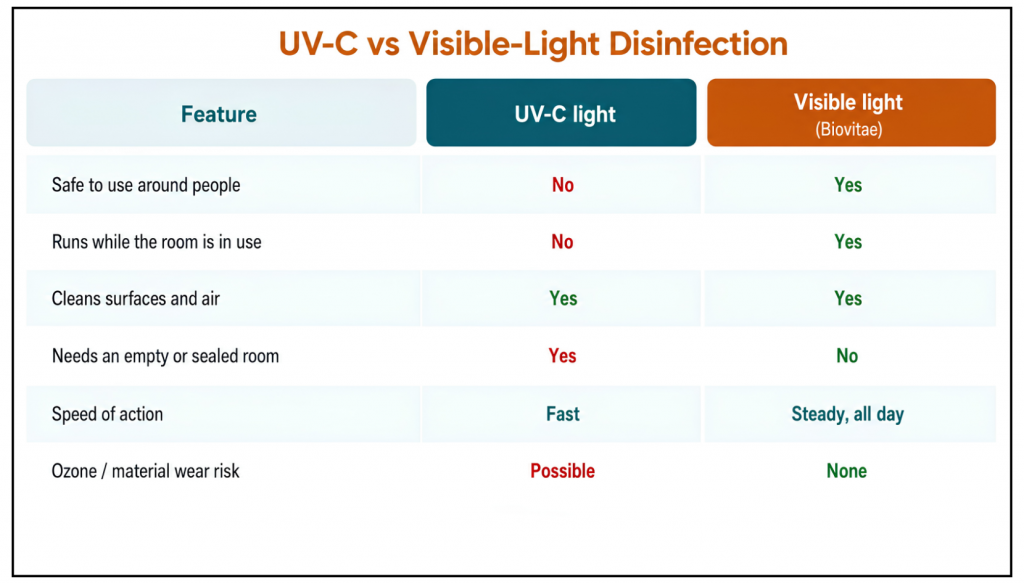
UV-C is stronger and faster, so it is the right choice for a deep clean of an empty, sealed space in a short time. Visible-light disinfection is gentler and slower, but it runs all day, safely, around people and pets.
Think of UV-C as a deep clean and visible light as ongoing housekeeping. One resets a room to a very low germ level; the other keeps that level down between cleans.
In many buildings the best plan uses both. UV-C handles periodic deep cleans of empty rooms, while visible light gives steady, everyday cover. You can read more about the technology behind visible-light disinfection and how it fits your rooms.
Things to check before you choose
A few simple questions help you pick the right method for each space.
-
Is the room ever empty, or is it busy all day?
-
Do you need a fast deep clean, or steady daily protection?
-
Are there materials that strong UV could damage?
-
Can you manage ventilation and safety signs for UV-C?
-
What are the running and maintenance costs over a year?
Visible-light systems use standard LED power, so they keep running costs low and need little upkeep, with no lamps to swap on a fixed cycle.
Ready to keep your space cleaner without emptying it first? Talk to Ermen Systems for advice on safe, always-on disinfection lighting for your building.
Where visible-light disinfection fits best
Visible-light disinfection is a strong fit for spaces that stay busy for long hours.
It works well in healthcare facilities, where infection control matters and rooms rarely sit empty. It also suits offices, shared and communal spaces, schools, kitchens and hospitality.
You can get it as bulbs, downlights, panels and batten lights, so it fits most fittings. Browse the full Biovitae range to see the options for your building.
Frequently Asked Questions
Yes. UV-C light can inactivate bacteria, viruses, mould and other microbes by damaging their DNA or RNA, so they cannot multiply.
Not directly. UV-C can burn skin and hurt the eyes, so standard UV-C must be used in empty or sealed spaces only.
UV-C is invisible, strong and unsafe around people. Visible-light disinfection uses safe visible light and can run while rooms are in use, but it works more slowly.
With UV-C, no. With visible-light disinfection, yes. It is UV-free and safe for people and pets at normal levels.
It depends on the lamp and the room, but a UV-C cycle often takes several minutes per area, with the room kept empty the whole time.
For deep cleaning empty rooms quickly, yes. For everyday protection in busy spaces, a safe visible-light system is usually easier to run.
Conclusion
UV-C is a powerful option for reducing germs in empty spaces, while visible-light disinfection provides a safer, continuous solution for occupied environments. Choosing the right technology can help maintain cleaner, healthier spaces without disrupting daily activities. Ermen Systems offers people-friendly disinfection lighting solutions designed to support cleaner and safer indoor environments.
