
Latest Blog
How to Improve Air Circulation in Rooms Without Windows
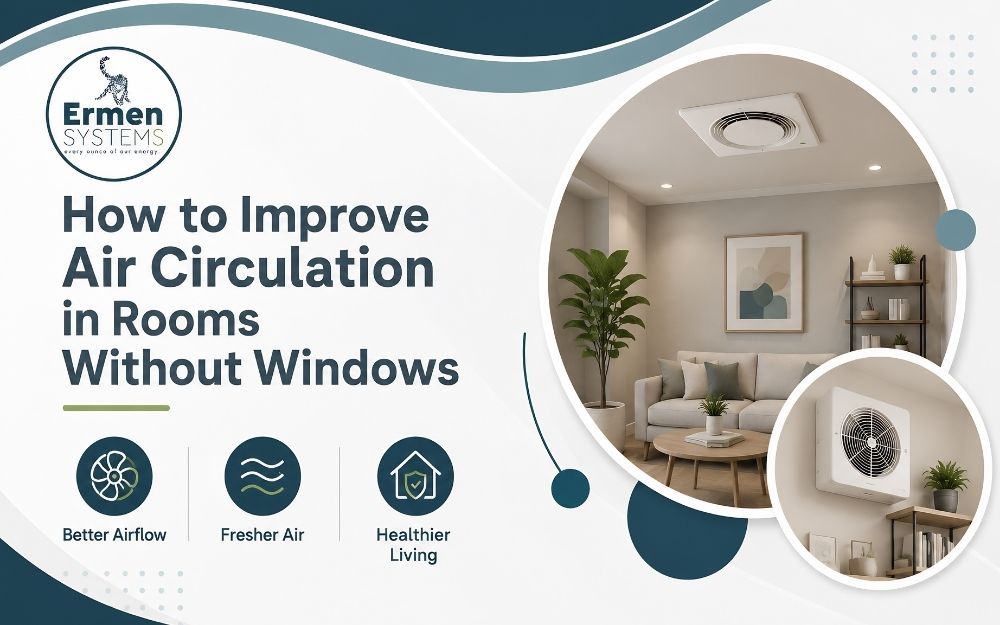
Good air circulation is essential for a healthy and comfortable living space, yet many homes, especially those with rooms lacking windows, struggle with proper airflow. Without windows, rooms can feel stuffy, humid, and uncomfortable, creating an environment prone to poor air quality and potential health issues.
Whether you’re dealing with a basement, an attic, or an interior space with limited ventilation, we’ll provide solutions that enhance airflow, reduce humidity, and ensure a fresher, healthier indoor environment. These strategies will help you transform any windowless room into a more breathable and enjoyable living area.
In this blog, we’ll explore practical and effective ways to improve air circulation in windowless rooms.
Why Air Circulation Matters?
Improve airflow, reduce humidity, and create a healthier indoor environment with the right ventilation solution.
Traditional ventilation often wastes heat by allowing warm indoor air to escape. Heat recovery systems solve this problem by transferring warmth from outgoing air to incoming fresh air.
This creates:
- Better energy efficiency
- Consistent airflow
- Reduced heating loss
- Improved comfort year-round
For Irish homes dealing with dampness and poor ventilation, this approach offers a balanced solution between fresh air and energy savings.
Recovery ventilation systems also help maintain healthier humidity levels, reducing the likelihood of mould growth.
Before we come to the solutions, let’s understand why improving air circulation is essential. Proper air circulation ensures that the air in a room stays fresh, cool, and free from pollutants. Without windows, rooms tend to trap moisture, heat, and pollutants, creating a stifling environment. This can lead to discomfort, mould growth, and health issues such as respiratory problems and headaches.
In windowless rooms, air circulation becomes even more critical to eliminate these risks and ensure your space remains breathable. Thankfully, there are several practical solutions to improve airflow, no matter how enclosed your room might be.
Maximize Airflow: Tips for Ventilating Windowless Rooms
Discover how to enhance airflow and air quality in your home’s most enclosed spaces.
1. Use a Destratification Fan
One of the best ways to improve air circulation in a room, especially one without windows, is by using a destratification fan. These fans help move air around the room by pushing hot air near the ceiling down to the floor, creating better airflow and temperature control. This is particularly useful in rooms with high ceilings, where warm air often gets trapped at the top.
Destratification fans, like those from Airius, are excellent for maintaining consistent airflow. They work by mixing the cool air near the floor with the warmer air at the ceiling, preventing the room from feeling stuffy or overly warm. This makes the air in your windowless room feel fresher and more comfortable.
Benefits of a Destratification Fan:
- Enhanced airflow: Moves air throughout the room, eliminating stagnant pockets.
- Improved temperature control: Distributes warm and cool air evenly, ensuring a comfortable temperature throughout the room.
- Energy efficiency: Reduces the need for air conditioning by improving air circulation, helping maintain a consistent temperature.
- Health benefits: Prevents moisture buildup, which can help reduce the risk of mould and improve air quality.
Investing in a destratification fan will help maintain comfort in your windowless rooms, ensuring that air circulates efficiently and the rooms remain fresh.
For a detailed comparison between Airius destratification fans vs ceiling fans, check out our in-depth analysis on the differences between these two air circulation solutions.
2. Install an air purifier.
Air purifiers are a must-have in any room, especially one that lacks proper ventilation. Without windows, pollutants and allergens can accumulate, negatively impacting indoor air quality. Air purifiers are equipped with filters that remove particles such as dust, pet dander, and mould spores, as well as odours, leaving the air in your room cleaner and fresher.
For rooms without windows, an air purifier not only cleans the air but also circulates it by drawing in air, filtering it, and releasing it back into the room.
Benefits of Using an Air Purifier::
- Improves air quality: Removes harmful particles from the air.
- Prevents allergens: Reduces dust, pollen, and pet dander.
- Promotes better health:Cleaner air can lead to improved sleep, better breathing, and reduced respiratory issues.
Air purifiers improve air circulation in windowless rooms by filtering harmful particles and releasing clean air back into the space. Choose a purifier with a HEPA filter to capture even the smallest particles.
3. Consider Mechanical Ventilation
Enjoy continuous fresh air, lower humidity, and better indoor comfort with a modern ventilation system.
If your room has no windows, installing a mechanical ventilation system is another smart solution. These systems are designed to pull fresh air from outside and push stale air out, ensuring continuous airflow. Mechanical ventilation systems can be installed in a variety of ways, including as wall-mounted units, ceiling vents, or part of a larger HVAC system.
There are two main types of mechanical ventilation:
- Exhaust ventilation: Pulls air out of the room, creating negative pressure.
- Supply ventilation: Brings fresh air into the room, creating positive pressure.
Both systems are effective for improving air circulation in windowless rooms. Exhaust ventilation is often ideal for rooms that require moisture removal, such as bathrooms or laundry rooms, while supply ventilation can bring in fresh outdoor air.
Benefits of Mechanical Ventilation:
- Continuous airflow: Ensures the room is never stagnant.
- Prevents humidity buildup: Helps to reduce mould and mildew.
- Energy-efficient: Newer systems use less energy while maintaining optimal airflow.
Mechanical ventilation systems can also help improve air circulation in rooms without windows. These systems bring fresh air in and push stale air out, ensuring continuous airflow and preventing moisture buildup.
4. Use a Ceiling Fan or Portable Fan
While a ceiling fan may not provide the same level of precision as a destratification fan, it is still an affordable option for circulating air in a room without windows. Ceiling fans are effective in smaller rooms or spaces with low ceilings, as they create airflow by moving the air in a circular motion. Portable fans can also be used strategically to push air through doorways or vents into other parts of the house, helping maintain circulation.
Benefits of Fans:
- Affordable and easy to install:A more budget-friendly solution.
- Quick airflow improvement: Fans circulate air quickly in confined spaces.
- Portable: Easily moved to different rooms as needed.
While fans may not be the most powerful option for rooms with high ceilings or poor airflow, they are still a great starting point for better circulation. However, if you want a more targeted and efficient approach, destratification fans will provide better results.
5. Ensure Proper Airflow Through Doors and Vents
In a windowless room, air can become stagnant without proper ventilation. To improve circulation, it’s important to create a path for air to move in and out of the room. You can do this by keeping the door slightly open, installing vents, or using a fan near the door to help push air out.
Benefits of Proper Airflow Through Doors:
- Encourages natural circulation: Air can freely move in and out of the room.
- Cost-effective: Simple solutions like keeping doors open or installing vents are easy to implement.
By creating a system that allows air to flow between rooms, you can improve the circulation in windowless spaces.
Smart Ventilation For New Builds And Renovations
Whether you’re building a new home or renovating an existing one, smart ventilation can be integrated seamlessly into your project. For new builds, installing a smart ventilation system during construction is a great way to future-proof your home and ensure optimal air quality from the start.
For existing homes, upgrading a smart ventilation system may require some minor adjustments, but the long-term benefits make it a valuable investment. The energy savings alone can offset the initial installation cost over time, making it an excellent choice for homeowners looking to upgrade their homes.
Frequently Asked Questions
Good air circulation prevents heat, humidity, and pollutants from building up, which can lead to stuffy air, poor air quality, and health issues like respiratory problems and mould..
Yes, air purifiers help circulate air by filtering harmful particles and releasing clean air. A HEPA filter captures even the smallest particles, improving air quality.
Yes, ceiling fans can help circulate air in smaller rooms by creating airflow, though they are less effective than destratification fans in larger or high-ceiling spaces.
A destratification fan is ideal for high-ceiling rooms, as it moves warm air down and ensures even temperature distribution throughout the space.
Final Thoughts
Improving air circulation in windowless rooms is possible with the right solutions. Using destratification fans, installing air purifiers, and setting up mechanical ventilation systems can all help keep your space comfortable and fresh. These methods work together to ensure proper airflow, reduce humidity, and improve air quality. By implementing these solutions, you can maintain a healthier and more comfortable environment in any room without windows.
Improve Air Quality And Comfort In Windowless Rooms
Enjoy fresher air and healthier living with modern ventilation solutions.
If you’re looking to improve your home’s air quality and comfort, visit Ermen Systems. We offer HVAC solutions, including destratification fans and air purifiers, to enhance air circulation. Explore our products today to find the perfect fit for your needs!
