
Latest Blog
How Demand-Based Ventilation Creates More Efficient Indoor Spaces
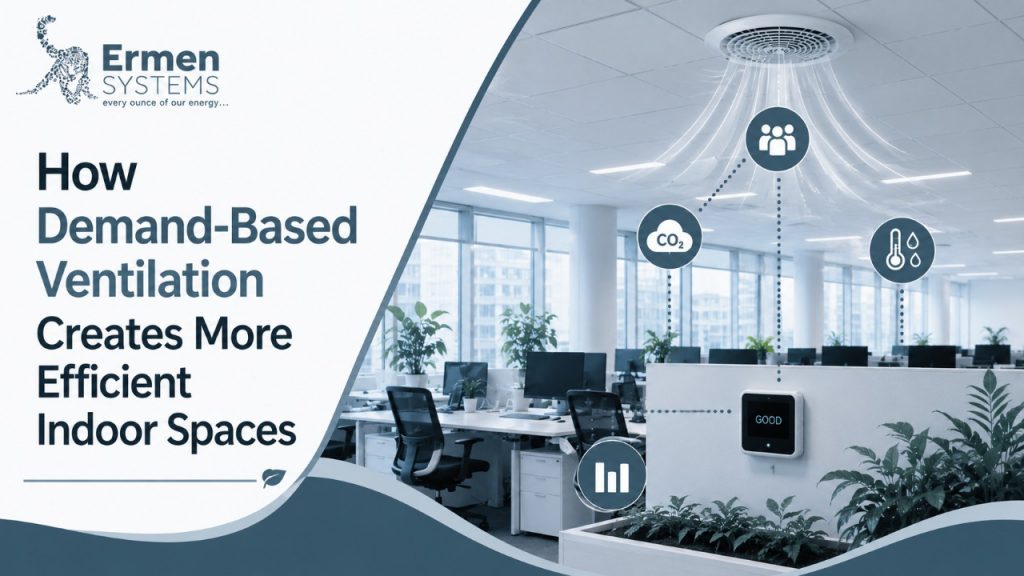
Modern buildings are designed to be more airtight than ever, helping reduce energy consumption and improve comfort. However, without proper ventilation, these buildings can trap humidity, carbon dioxide, allergens, and airborne pollutants indoors. The result is poor indoor air quality, condensation, mould growth, and uncomfortable living or working environments.
This is where smart ventilation sensors make a real difference. Instead of running ventilation systems at fixed speeds all day, these intelligent sensors continuously monitor indoor conditions and automatically adjust airflow whenever it’s needed.
The result is cleaner air, lower energy consumption, and healthier indoor spaces without unnecessary heat loss. Whether installed in homes, offices, schools, or commercial buildings, smart ventilation technology offers a practical way to balance comfort, wellbeing, and efficiency while supporting modern energy standards.
What Are Smart Ventilation Sensors?
Smart ventilation sensors are intelligent monitoring devices that continuously measure indoor environmental conditions, such as:
- Carbon dioxide (CO₂)
- Humidity
- Temperature
- Air quality (VOC levels)
- Occupancy
Instead of relying on manual controls or fixed ventilation schedules, these sensors communicate directly with ventilation systems to automatically adjust airflow.
For example, when a meeting room fills with people, CO₂ levels rise quickly. Smart sensors detect this change and increase the fresh air supply. Once the room empties, airflow is reduced again, preventing unnecessary energy use.
This intelligent approach forms the foundation of demand controlled ventilation, ensuring buildings receive exactly the amount of fresh air they require; no more and no less.
Why Fixed-Speed Ventilation Is Not Enough
Traditional ventilation systems often operate at constant speeds regardless of occupancy or indoor conditions.
This creates two common problems:
- Ventilating empty spaces wastes heating energy.
- Insufficient ventilation during busy periods allows pollutants and moisture to accumulate.
Smart ventilation sensors solve both challenges by making ventilation responsive instead of static.
Imagine a classroom occupied for only six hours each day. Running maximum ventilation overnight serves no purpose. Smart controls automatically reduce airflow during vacant periods and increase ventilation when students arrive, improving efficiency while maintaining healthy indoor air.
How Smart Ventilation Sensors Improve Indoor Air Quality
Indoor air contains far more contaminants than many people realise.
Cooking, cleaning products, furniture, building materials, and even breathing continuously release pollutants into enclosed spaces.
Smart ventilation systems respond immediately when indoor air quality begins to decline.
Benefits include:
- Reduced CO₂ concentration
- Reduce humidity levels
- Less condensation and mould
- Removal of airborne pollutants
- Better comfort for occupants
Maintaining healthier indoor air quality is particularly valuable in offices, healthcare facilities, schools, and modern airtight homes, where natural airflow is limited.
Reduce Energy Bills Without Sacrificing Comfort
Upgrade to smarter ventilation for cleaner indoor air, greater comfort, and lower energy costs.
One of the greatest advantages of smart ventilation sensors is their ability to reduce energy waste.
Ventilation accounts for a major portion of heating demand because warm indoor air is continually replaced with cooler outdoor air.
Rather than ventilating continuously, sensor-controlled systems only operate at higher airflow rates when required.
Combined with efficient MVHR systems, much of the heat from outgoing air can be recovered and transferred to incoming fresh air before it enters the building. This process helps reduce heating demand while maintaining a comfortable indoor environment. Some modern MVHR systems also include integrated humidity, temperature, air quality, and light sensors that automatically adjust airflow based on indoor conditions, improving ventilation efficiency and occupant comfort.
Real-World Applications
From homes to commercial buildings, smart ventilation sensors adapt airflow to changing indoor conditions, improving comfort, indoor air quality, and energy efficiency across a wide range of environments.
Residential Homes
Modern Irish homes are becoming increasingly airtight to improve energy efficiency. Without intelligent ventilation, moisture can build up quickly, causing condensation around windows and encouraging mould growth.
Smart ventilation sensors continuously monitor indoor conditions and automatically respond before problems develop.
Commercial Offices
Occupancy changes throughout the working day.
Meeting rooms, reception areas, and open-plan offices often experience fluctuating air quality.
Sensor-controlled ventilation ensures employees enjoy fresh air without unnecessary energy consumption during quieter periods.
Schools
High CO₂ levels can affect concentration and comfort.
Smart ventilation sensors automatically provide additional fresh air when classrooms become occupied, creating healthier learning environments.
Healthcare Facilities
Hospitals and clinics require consistent indoor air quality to support patient wellbeing.
Automated ventilation helps maintain cleaner indoor environments while improving operational efficiency.
Features To Look For In Smart Ventilation Sensors

Not all sensor-based systems provide the same level of performance.
When selecting a solution, look for:
- Real-time CO₂ monitoring
- Humidity detection
- Temperature monitoring
- Air quality sensors
- Automatic airflow adjustment
- Remote monitoring capabilities
- Integration with building management systems
- Energy-efficient heat recovery
Modern ventilation technologies are designed to improve indoor air quality, occupant comfort, and energy efficiency. Many systems now feature intelligent controls and are suitable for both retrofit and new-build projects, making it easier to integrate effective ventilation solutions across a wide range of residential and commercial buildings.
Why Smart Ventilation Is Becoming Essential
Across Ireland and the UK, greater emphasis is being placed on healthier buildings and reduced carbon emissions.
Demand-responsive ventilation helps meet these objectives by balancing indoor comfort with energy efficiency.
Whether improving a family home or upgrading a commercial building, intelligent ventilation provides measurable benefits:
- Better indoor air quality
- Reduced heating costs
- Lower carbon emissions
- Improved occupant wellbeing
- Automated system performance
- Future-ready building technology
As ventilation standards continue evolving, smart sensor technology is becoming an essential part of sustainable building design rather than an optional upgrade.
Frequently Asked Questions
Yes. They reduce unnecessary ventilation by adjusting airflow based on real-time indoor conditions, lowering heating and ventilation costs.
Absolutely. Many modern MVHR systems integrate smart sensors to optimise airflow while recovering heat from outgoing air.
Yes. Many solutions are designed for both retrofit projects and new developments, making upgrades straightforward in homes and commercial properties.
Yes. They continuously monitor pollutants, humidity, and CO₂ levels, automatically increasing fresh air whenever indoor conditions deteriorate.
Final Thoughts
Smart ventilation sensors are transforming how buildings manage indoor air. By continuously responding to occupancy and environmental conditions, they improve air quality, reduce unnecessary energy use, and create healthier, more comfortable spaces. For homeowners and businesses across Ireland, investing in intelligent ventilation is a practical step towards greater efficiency, sustainability, and long-term building performance.
Upgrade Indoor Air Quality with Intelligent Ventilation Today
Get expert advice and find the right ventilation solution for a healthier, more energy-efficient property.
Discover advanced smart ventilation solutions from Ermen Systems that help improve indoor air quality, optimise energy efficiency, and create healthier residential and commercial environments across Ireland. Explore our innovative ventilation technologies today.
